
Influencer Marketing Strategy: 6 Cooperation Models Explained
With Pro Tips That Actually Work
Influencer marketing isn’t one-size-fits-all. The cooperation model you choose shapes everything: your creative output, risk profile, and results. Here’s a breakdown of the six core models - and the insider tips that separate good campaigns from great ones.

- Sponsored Organic Post - paid post on the influencer’s profile
- Image Rights for Paid Ads - license their face for your ad campaigns
- Partnership Ads (Spark Ads) - paid promotion from their account
- UGC - creator makes content, you use it in your channels
- Affiliate - commission-based, pay for results
- Retainer - ongoing monthly partnership
1. Sponsored Organic Post
How It Works
The most common model of them all. The influencer publishes a post, reel, TikTok, or YouTube short featuring your brand on their profile. You’re essentially buying access to their audience’s attention. The content lives on their feed and reaches their followers (plus algorithmic distribution).
Pro Tips
- Forget follower counts. In the short-form content era, algorithms decide who sees what. Evaluate influencers by average views on their last 10-15 posts instead.
- Sponsored content underperforms organic content - always. Expect 30-40% fewer views on Instagram, up to 60-70% fewer on TikTok. YouTube mid-roll placements are the exception: minimal drop since viewers watch the video as a whole.
- Ask for stats from previous brand deals specifically, not overall account analytics. General stats inflate expectations.
- The closer the influencer is to your exact target audience and the more domain authority they have, the more each impression is worth. A niche 50k creator can outperform a generic 1M account.
- Give a clear brief but leave creative freedom. The influencer knows their audience’s language better than you do.
Pro Tip
Request a “no edit approval” clause for stories/TikToks - but always approve static feed posts. This balances authenticity with brand safety.
2. Image Rights for Paid Ads
How It Works
The influencer records content or provides their likeness, and you run it as a paid ad from your own ad account. The content does not appear on their profile. You’re paying for the license to their face, voice, and name - not for their organic reach.
Pro Tips
- This only makes sense for widely recognized faces or people with very strong domain authority. If the audience doesn’t recognize them immediately, you’re paying a premium for nothing.
- Always A/B test: influencer creative vs. standard creative. The CPC lift from an influencer’s face is typically just 5-15%. Know your numbers before scaling.
- Negotiate license scope tightly: which platforms, which markets, how long. Unlimited global rights cost 3-5x more than a single-platform, single-market, 3-month license.
- Works best when you have a large media budget - the license cost amortizes over millions of impressions, making the per-impression cost negligible.
- Pair image rights with UGC-style creative (authentic, low-production feel) rather than polished studio ads. The combination of a familiar face + authentic style performs best.
To create more ad diversity you can try Blumpo - AI tool that scans reddit and social media to create ads that not only look good but also perform!
3. Partnership Ads (Spark Ads)
How It Works
The influencer creates a post, and you promote it as a paid ad that appears to come from their account. On Meta, these are Partnership Ads (formerly Branded Content Ads); on TikTok, Spark Ads; on YouTube, BrandConnect. The user sees an ad “from” a person they know, not from a brand they don’t.
Pro Tips
- This is the sweet spot of influencer marketing. You get the influencer’s social proof combined with full paid-media control: targeting, budget, optimization, and measurement.
- CTR is typically 20-50% higher than standard paid ads with identical creative, purely from the social proof effect.
- The post must stay live on the influencer’s profile for the entire promotion period. Deletion kills the ad immediately. Put this in the contract explicitly.
- Make sure the influencer correctly configures partnership settings on their account before the campaign starts. Technical setup issues are the #1 cause of launch delays.
- Bundle the deal: content creation + promotion rights for a fixed window (30/60/90 days). Don’t pay for these separately - you lose negotiation leverage.
- Ideal for performance campaigns where you need both credibility and measurable ROAS.
Pro Tip
Run the same creative as both a partnership ad and a standard brand ad simultaneously. Compare CPAs side by side to quantify the exact value of the influencer’s name.
4. UGC (User Generated Content)
How It Works
A creator (who may or may not have a large following) produces video or photo assets according to your brief. The content is not posted on their profile — it’s delivered to you for use in your own channels: paid ads, organic social, website, email marketing, etc.
Pro Tips
- Authenticity is the whole point. UGC works because it looks like real people talking about real experiences. Over-polished content defeats the purpose.
- Order multiple variants from different creators. 5-10 different videos from different faces costs less than one large influencer collaboration and gives you far more opportunities for creative testing. Keep in mind that audiences quickly get tired of the same message, so variety is key - especially when dealing with ad fatigue in digital advertising.
- Write detailed briefs with examples: length, format, key messages, CTA, tone of voice. UGC creators often aren’t seasoned influencers and need clear direction.
- Always negotiate full usage rights upfront: paid ads, organic, website, email, with no time limit. Adding rights later is more expensive.
- UGC creators often offer packages (e.g., 3 videos for price X, 5 for Y). Always order the larger package - marginal costs are low and more creative = better ad optimization.
- Scale with platforms like Billo, Insense, or Clip to source hundreds of creators at once without managing individual relationships.
Why UGC + Blumpo Is a Power Combo
UGC gives you raw human material.
Blumpo turns that material into structured, insight-based ad variants built around real buying triggers.
Instead of guessing what angle might work, you can:
- Feed your UGC scripts into Blumpo
- Let it generate multiple performance-oriented hooks
- Build problem-solution, competitor, fear-of-missing-out, or ROI-focused versions instantly
- Deploy them as structured paid ads
One UGC shoot can turn into 15-30 strategic ad variations.
That’s how you move from “content creation” to systematic ad testing.
Pro Tip
Combine UGC with partnership ads: have the UGC creator post the content, then run it as a spark ad. You get UGC pricing with partnership-ad performance.
5. Affiliate (Performance-Based)
How It Works
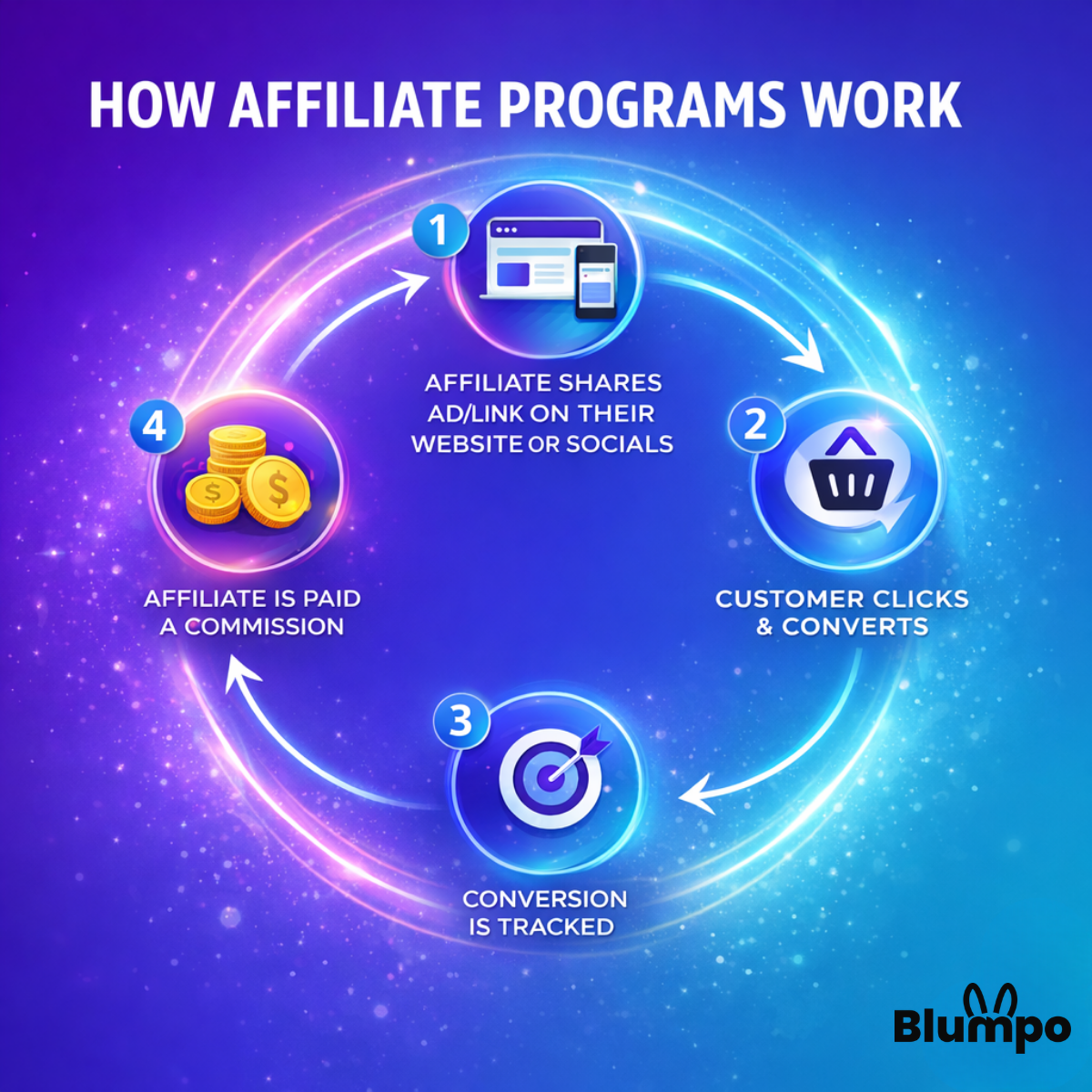
The influencer promotes your product with a unique link or discount code and earns a commission on every sale they generate. You only pay for actual results - making it the lowest-risk model for the brand.
Pro Tips
- Pure affiliate rarely attracts quality influencers because it shifts all risk to them. Use a hybrid model instead: a small base fee (30-50% of standard rate) plus commission as a bonus. This keeps them motivated while protecting your budget.
- Give the influencer real tools: a unique discount code (that gives value to their audience), a dedicated landing page, UTM-tracked links, and a real-time dashboard showing their performance.
- Set a long attribution window - minimum 30 days, ideally 60-90. Influencer content is top-of-funnel; people may convert weeks after seeing it.
- Best for high-AOV products with good margins: premium fashion, SaaS, financial products, online courses. Low-ticket items generate too little commission to motivate anyone.
- Communicate results regularly. Share wins, offer exclusive deals for their audience, and give early access to new products. Engaged affiliates perform 3-5x better than passive ones.
- Avoid pure affiliate with sub-100k influencers - their reach can’t generate meaningful sales volume, which demoralizes both sides.
Common Trap
Brands often set up affiliate programs and expect influencers to promote actively with no upfront investment. That’s not a partnership - it’s a job listing. Invest in the relationship first.
6. Retainer (Long-Term Partnership)
How It Works
A monthly contract for ongoing collaboration: a fixed number of posts, reels, and stories per month over 3-12 months. This is ambassador-level work - not a one-off campaign, but a real brand-creator relationship.
Pro Tips
- Minimum 3 months. Shorter retainers don’t build enough repetition for the audience to associate the influencer with your brand. The ideal length is 6-12 months.
- Give creative freedom. In a long-term partnership, the influencer knows how to talk to their audience better than your brief does. Overly rigid guidelines kill authenticity.
- Set a clear content calendar and KPIs: e.g., 2 reels + 4 stories/month with a minimum average view count. Without measurable goals, both sides lose focus.
- Bundle promotion rights into the retainer. Retainer + partnership ads is the most powerful combination in influencer marketing.
- Invest in the relationship: send products, invite them to events, treat them as a business partner. Loyal influencers generate the best results because their endorsement is genuine.
- Use the retainer to test and learn: try different formats, hooks, CTAs, and posting times. Long-term partnerships give you the luxury of iteration.
Pro Tip
Start with a 3-month pilot with clearly defined KPIs. If it works, transition to 6-12 months with an expanded scope and better terms for both sides. Never commit to a year upfront with an unproven creator.
Which Model Should You Choose?
- Need quick awareness? => Sponsored organic post
- Have a big media budget + famous faces? => Image rights for paid ads
- Want the best paid-media ROI? => Partnership ads
- Need lots of creative assets cheaply? => UGC
- Want to pay only for results? => Affiliate (hybrid)
- Building a long-term brand presence? => Retainer
The best brands combine multiple models: a retainer with a core ambassador, UGC from smaller creators for creative testing, and partnership ads to scale winning content. Test, measure, iterate. If you are looking for detailed information on how much to pay influencers for each model, be sure to check out our article on influencer pricing strategies!